
Highlights
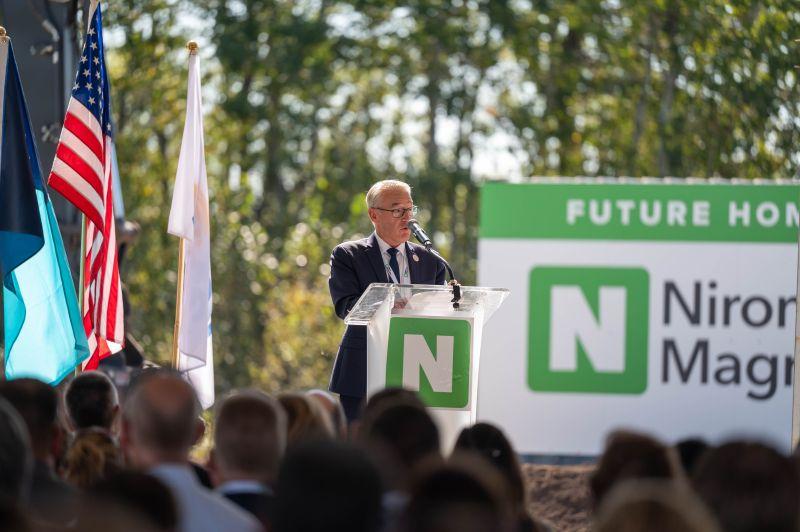
- Niron Magnetics has broken ground on the world's first commercial-scale facility for manufacturing iron-nitride permanent magnets in Sartell, Minnesota.
- The project is backed by $17.5M from ARPA-E's SCALEUP program.
- The rare-earth-free Clean Earth Magnet technology uses abundant materials.
- This technology offers the U.S. a strategic alternative to China's 90% control of global magnet production for EVs and wind turbines.
- This commercial breakthrough could moderate demand pressure on neodymium-praseodymium.
- The facility represents the first credible challenge to rare-earth magnets in decades, potentially reshaping supply chain strategies.
Did Sartell, Minnesota, just become one of the most important dots on the U.S. magnet map? Yes, according to a U.S. government message online. That’s because Niron Magnetics—backed by ARPA-E’s SCALEUP program (opens in a new tab)—has officially broken ground on the world’s first commercial-scale facility dedicated to manufacturing iron-nitride permanent magnets, a technology long touted as the most credible rare-earth-free alternative to NdFeB.
Table of Contents
ARPA-E Deputy Director for Technology, Dr. Daniel Cunningham (opens in a new tab), underscored the moment:
“Optimization of how critical minerals are used, and discovering viable alternatives, has long been a focus for ARPA-E. Niron Magnetics' pioneering work with iron nitride, the world's first rare-earth-free permanent magnet, set them apart from the very beginning.”
A Supply Chain Signal, Not Just a Ceremony
For investors following the rare earth ecosystem, this isn’t merely an engineering achievement—it’s a strategic pivot point. Washington is pouring money into diversification, and ARPA-E’s $17.5 million SCALEUP award positions Niron as a viable competitor to China’s near-total dominance of magnet production.
Niron’s Clean Earth Magnet® uses abundant, low-cost commodity materials, sidestepping the price volatility, environmental burden, and geopolitical fragility tied to neodymium, praseodymium, dysprosium, and terbium. If performance scales as projected, the U.S. could gain its first serious path toward magnet independence in electric vehicles, industrial motors, and wind turbines.
The Path to Commercial Reality
The company’s Minneapolis-based project (active through November 2025) aims to move from pilot-production sampling toward full-scale domestic output. Early industry interest suggests the market is more than ready: OEMs want alternatives that de-risk their supply chains without sacrificing torque or energy density.
In a sector where China holds ~90% of global magnet manufacturing, even a partial substitution technology could reshape contracting strategies, sourcing assumptions, and national-security calculations.
Why This Matters for Rare Earth Investors
- This is among the first of credible commercial challenges to rare-earth-based magnets in decades.
- If iron-nitride magnets reach scale, demand pressure on NdPr may moderate, while heavy REE deficits (Dy/Tb) could soften at the margin.
- The U.S. could gain a strategic hedge in case of supply disruption—an increasingly plausible scenario as geopolitical tensions rise.
©!-- /wp:paragraph -->


0 Comments