
Highlights
- Central Asia, especially Kazakhstan, has abundant critical minerals.
- Weak institutions and raw-export dependency threaten to keep it as a feedstock supplier rather than a value-chain power.
- Researchers forecast continued export growth through 2027.
- Without deeper processing, ESG standards, and regulatory reform, most material will flow into China's processing ecosystem.
- The study proposes a strategic framework emphasizing:
- Domestic refining capacity
- Market diversification
- Governance modernization
- These strategies aim to help Kazakhstan become a credible ex-China supply node.
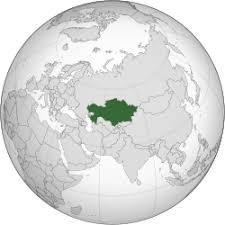
Aksana Zh. Panzabekova (opens in a new tab), Institute of Economics, Kazakhstan’s Ministry of Science and Higher Education (opens in a new tab)), with co-authors Galymzhan M. Duisen, Alua N. Kopbossynova, and Aksaule B. Zhanbozova via R.B. Suleimenov Institute of Oriental Studies, Ministry of Science and Higher Education of the Republic (opens in a new tab) of Kazakhstan (opens in a new tab), delivers a pointed warning for Western investors hunting “the next rare earth frontier”: Central Asia has the rocks—Kazakhstan especially—but weak institutions and a raw-export habit could keep the region stuck as a quarry, not a value-chain power.
Table of Contents
Aksana Zh. Panzabekova, First Author

In R-Economy (2025), the team models export flows, audits institutional barriers, and proposes a strategic export framework aimed at deeper processing, market diversification, and ESG standards—precisely the ingredients needed if the region is to become a credible ex-China node rather than a new feedstock lane into China’s processing machine.
Study Methods: Numbers, Comparisons, and a Governance Reality Check
This is an economic and institutional strategy paper, not a geology report or metallurgical study. The authors combine:
- Time-series export analysis using UN Comtrade and ITC Trade Map data (2015–2023), then forecasting 2025–2027 with linear trend models and statistical adequacy checks (residual tests; error rates reported).
- Comparative institutional analysis of Kazakhstan vs. Australia and Chile, focusing on processing localization, investment tools, regulatory quality, and ESG adoption.
- Regulatory quality assessment using international indices and analytical sources, to diagnose why investment and processing lag despite resource abundance.
Key Findings: The Region Is Rising, But Still Trapped in Raw Exports
1. Export growth is real—but it’s lopsided.
The model projects continued growth of Central Asian exports to Europe and Asia through 2027, with Asia’s pull strengthening. The authors frame this as opportunity—but also vulnerability—because demand growth alone does not create domestic value.
2. Kazakhstan is the “anchor” candidate—on paper.
The study positions Kazakhstan as the region’s natural hub due to its scale, location, and existing mining-metals base (ERG, Kazakhmys/KAZ Minerals, KazZinc). But it stresses that resource wealth does not equal supply-chain power without domestic processing capacity and predictable governance.
3. The real barrier is institutional, not mineral.
The authors argue that low processing depth, licensing opacity, weak coordination, and uneven ESG readiness discourage long-horizon capital and keep the export model locked in concentrates and semi-finished goods. In REEx terms, a region can be strategically “rich” yet economically trapped.
4. A proposed strategy tries to break the pattern. Their framework emphasizes:
- Deeper processing (alloys, cathodes, refined products) rather than raw ore exports
- Export diversification (reducing over-reliance on any single external market)
- ESG integration into licensing and export contracts
- Logistics modernization, including the Trans-Caspian corridors
They even outline illustrative initiatives like a processing cluster (“Rare Metals Valley”) and a regional coordination mechanism.
Implications for REE Supply Chains: Don’t Feed China’s Monopoly by Accident
Here’s the uncomfortable implication: Central Asia can either help diversify ex-China supply—or reinforce China’s processing dominance. If Kazakhstan expands mining without building separation, refining, and downstream qualification, the most likely outcome is more material flowing into China, because China remains the world’s most complete processing ecosystem. The paper explicitly flags dependence on a single external market as a strategic risk—an indirect acknowledgement of the “China gravity well” problem.
For Western investors and policymakers, the message is clear: treat governance reform and processing buildout as the investable thesis, not just “reserves in the ground.”
Limitations and Controversial Angles
- Forecasting constraints: Linear trend models are informative but can miss shocks—commodity price collapses, sanctions, export controls, coups, or corridor disruptions. The authors acknowledge limited scenario dynamics under external instability.
- Secondary data dependence: Trade databases and indices are only as good as reporting quality; Central Asia’s data can be uneven.
- China adjacency risk: Notably, the research was funded under a program titled “Multilateral Cooperation between Central Asia and China…”—not disqualifying, but relevant context for readers evaluating strategic framing and potential blind spots.
Kazakhstan’s Choice Is Simple—and Hard
This study doesn’t romanticize minerals. It argues that Kazakhstan can become a strategic critical-minerals hub only if it builds processing depth, predictable rules, and ESG credibility—fast enough to matter. Otherwise, the region risks a familiar fate: exporting value outward while importing finished technology back at a premium. For the West, that’s not diversification. That’s dependency by another route.
Citation: Panzabekova, A.Zh., Duisen, G.M., Kopbossynova, A.N., & Zhanbozova, A.B. (2025). Critical metals and minerals of Kazakhstan and other central Asian countries: institutional barriers and strategic export policy. R-Economy, 11(4), 406–429. https://doi.org/10.15826/recon.2025.11.4.022 (opens in a new tab)
©!-- /wp:paragraph -->


0 Comments