
Highlights
- Beijing imposed export controls on dual-use items to Japan in response to PM Takaichi's Taiwan Strait remarks, framing the move as defensive rather than escalatory.
- Japan sources 72% of its rare earth imports from China and faces immediate risk—major manufacturers warn of production stoppages within two months if supplies are cut.
- The episode exposes persistent Western vulnerabilities in rare earth supply chains and accelerates friend-shoring efforts, though alternatives remain expensive and incomplete.
Two recent pieces (opens in a new tab) from China Daily, a state-owned media outlet, frame Beijing’s latest export controls on Japan as lawful, defensive, and necessary. Read together, they reveal a sharper reality for global markets: rare earths are again being positioned as strategic leverage, this time in direct response to Japan’s security posture and Taiwan-related rhetoric.
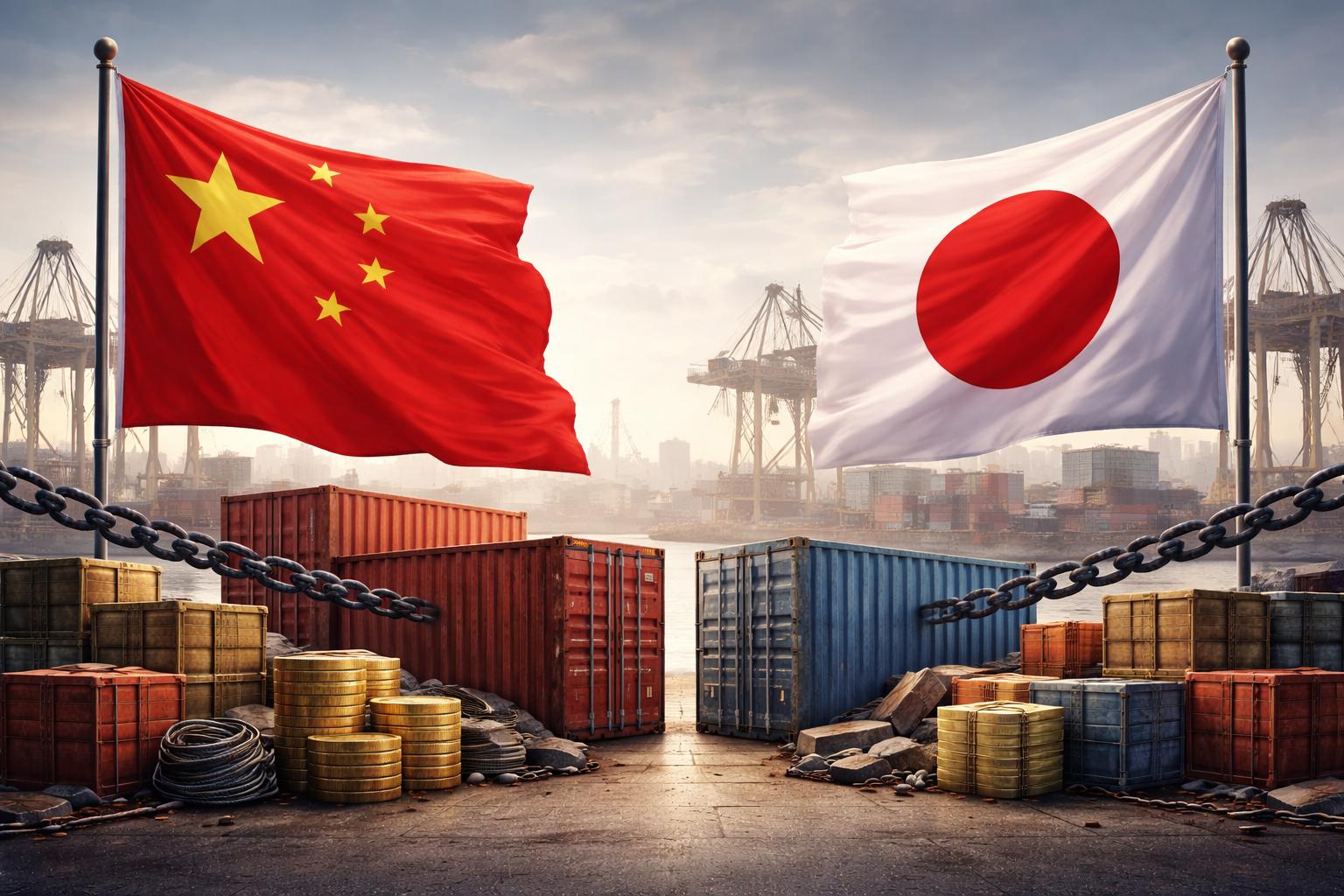
Table of Contents
What China Is Saying
According to China’s Ministry of Commerce, Beijing has imposed an immediate ban on exports of dual-use items to Japan—goods that can serve both civilian and military purposes. Officials argue the move is a response to remarks by Japanese Prime Minister Sanae Takaichi that China characterizes as implying potential military intervention in the Taiwan Strait. Chinese officials further signal that export permit reviews for certain rare earth–related items may also be tightened, though no formal, blanket rare-earth ban has yet been announced.
Beijing’s message is consistent across both articles:
- The measures are “legitimate, reasonable, and lawful.”
- Civilian supply chains will theoretically remain unaffected.
- Japan’s actions are portrayed as steps toward remilitarization and even nuclear ambitions, which China claims threaten regional stability and the post-war order.
From China’s perspective, this is framed not as escalation, but as coercive signaling—pressure intended to force Tokyo back toward “rational” diplomacy.
Japan’s View: Economic Alarm Bells
Also Chinese media promotes that Japanese economists, executives, and manufacturers are openly warning that supply-chain risk is immediate and severe, especially if rare earths move from “under review” to active restriction.
Key facts stand out:
- Japan still sources ~72% of its rare earth imports from China (2024) despite years of diversification efforts starting over a decade ago.
- Core Japanese industries—autos, semiconductors, electronics, EVs, and renewables—are highly exposed.
- A major Japanese magnet producer interviewed by TV Asahi said it could operate for only about two months if raw material supplies were disrupted.
- Business leaders emphasize that the greatest risk is not cost inflation, but outright production stoppages.
Japanese analysts warn that if controls persist into late 2026 or expand, Japan’s growth outlook would likely be revised downward, and private investment decisions could stall amid uncertainty.
Western / U.S. Perspective: Déjà Vu With Higher Stakes
For the U.S. and Europe, this episode reinforces a familiar—and uncomfortable—lesson: rare earth dependence remains a strategic vulnerability, even for advanced economies with strong industrial bases.
From a Western standpoint:
- China is again demonstrating that processing and export licensing—not mining—are the real choke points.
- The episode accelerates friend-shoring, reshoring, and alternative-technology investment, but also underscores how long and capital-intensive those transitions are.
- The framing matters: China is not presenting export controls as economic tools, but as national-security enforcement, complicating WTO-style dispute resolution.
As Rare Earth Exchanges™ has previously argued, leverage is not cost-free. Each episode of export signaling pushes Japan, the U.S., and Europe to invest more aggressively in non-Chinese supply chains—even if near-term alternatives are expensive and incomplete.
Why This Matters Now
This is not just a China–Japan dispute. It is a stress test for the global rare earth system at a moment when EVs, defense electronics, AI hardware, and clean energy are all scaling simultaneously. The signal to Western policymakers is stark: strategic minerals are now openly entangled with security doctrine, and market stability can no longer be assumed.
Disclaimer: This analysis is based on reporting from China Daily, a media outlet owned by the Chinese state. Statements and characterizations reflect official Chinese positions and should be independently verified using non-state and international sources.
©!-- /wp:paragraph -->


0 Comments