
Highlights
- Professor Koen Binnemans exposed chronic inefficiencies in solvent extraction (SX) chemistry, including entrainment losses, crud formation, and extractant degradation, that undermine the West's rare earth refining capacity despite massive capital investment.
- China's rare earth dominance stems from operational mastery of complex SX processes requiring hundreds of sequential stages, not just mineral access—a chemistry expertise Western producers are struggling to replicate.
- Dwindling commercial extractant suppliers and process complexity, not geology or capital, now represent the true bottleneck threatening Europe and North America's critical mineral independence.
At the International Process Metallurgy Symposium (IPMS) 2025 in Finland (opens in a new tab), Professor Koen Binnemans (opens in a new tab) of KU Leuven’s SOLVOMET Group (opens in a new tab) delivered a rare public deep dive into the industrial alchemy underpinning the energy transition—solvent extraction (SX). This chemistry workhorse, largely invisible to the general public, is the backbone of modern hydrometallurgy, refining nickel, cobalt, and rare earth elements (REEs) into battery-grade purity.
Table of Contents
Binnemans’ central message was blunt: the world’s clean-energy metals pipeline still leaks—literally and figuratively. Despite decades of progress, industrial solvent extraction faces chronic inefficiencies: entrainment losses, chemical solubility losses, emulsion and crud formation, and cross-contamination between circuits. Each glitch translates into lost yield, higher CAPEX, and environmental risk, making SX both the hero and Achilles’ heel of critical mineral refining.
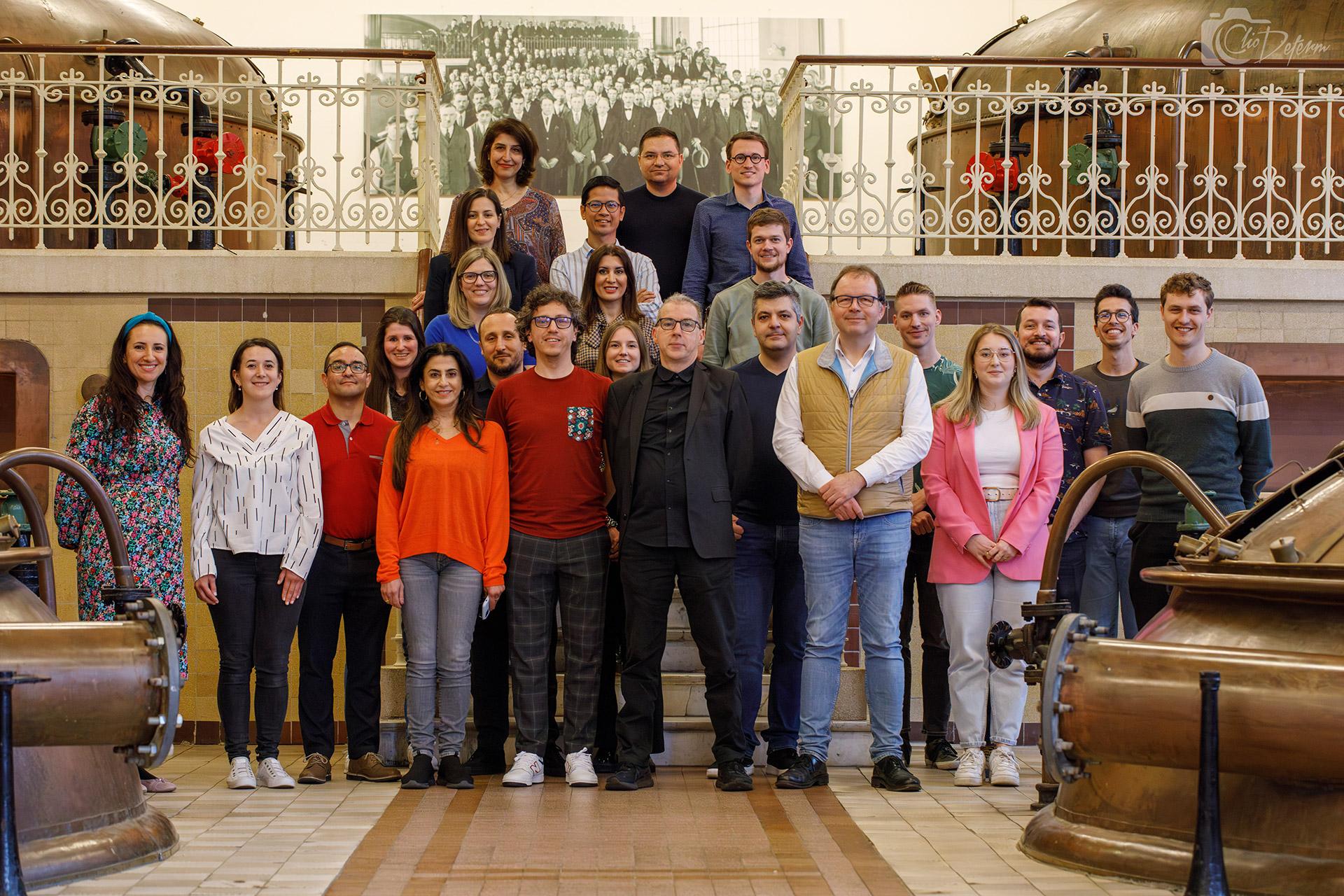
KU Leuven SOLVOMET Group—telling it like it is
Why It Matters: The Silent Bottleneck in Rare Earth Refining
Binnemans’ presentation, rich with data from European and global SX operations, underscored how REE solvent extraction remains far more complex than base-metal analogs—a point humorously captured in his slide comparing “muscular REE SX” to “weak Cu SX.” The reason: separating chemically similar lanthanides requires hundreds of sequential mixer-settler stages.
This process complexity has direct geopolitical implications. China’s dominance in REE separation is built not just on mineral access, but on operational mastery of SX chemistry—an expertise the West is only beginning to re-learn. For emerging producers in Australia, Europe, and North America, Binnemans’ message is clear: process engineering, not geology, will define the next phase of rare earth independence.
A Hard Truth Behind the Beakers
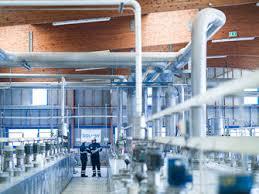
SOLVOMET’s research confirms what many inside the sector already suspect: Western refining capacity remains constrained by chemistry rather than capital. Problems like third-phase formation, diluent oxidation, and extractant degradation can cripple output if not properly managed. Even the word “solvent,” Binnemans noted, evokes outdated fears of toxicity—but modern SX facilities, like Solvay’s La Rochelle plant (opens in a new tab), now meet the highest sustainability standards.
The Plant
Still, optimism has its limits. The talk hinted at dwindling commercial extractant availability and an industry reliant on a shrinking supplier base. If that supply risk isn’t addressed, new REE plants could be built on a foundation of chemical fragility.
Reading Between the Molecules
From a Rare Earth Exchanges (REEx) perspective, Binnemans’ presentation stands as both technically rigorous and refreshingly honest—no hype, no political spin. The data aligns with field experience across La Rochelle, Lynas Malaysia, and new European pilot plants. The only speculative element is the assumption that process optimization alone can close the cost gap with China; that remains an open question.
The larger takeaway: solvent extraction may not be glamorous, but it is the quiet determinant of who wins—or stalls—in the rare earth race.
©!-- /wp:paragraph -->


0 Comments