
Highlights
- Italy's ambassador identifies Zimbabwe as an opportunity for rare earth development, though the country lacks commercial-scale processing infrastructure and downstream capabilities despite significant mineral deposits.
- Chinese investors currently control an estimated 90% of Zimbabwe's mining sector, with companies like Premier African Minerals actively exploring rare earth deposits including the Katete Project.
- A 2025 policy paper recommends Zimbabwe nationalize rare earths and prioritize domestic beneficiation over raw exports, emphasizing governance reforms to capture higher-value supply chain stages.
Italy’s ambassador to Zimbabwe, Giuseppe Giacalone (opens in a new tab), told the Italian media ANSA (opens in a new tab) this week that Harare, Zimbabwe, presents “interesting opportunities” in rare earths and other critical minerals, describing the country as relatively stable and economically dynamic. The remarks, delivered on the margins of a conference at Italy’s foreign ministry, are diplomatic signaling—measured, optimistic, and notably non-committal.
Rare Earth Exchanges™ can confirm that a group of junior miners is actively identifying rare earth deposits in that African nation, according to discussions.
Table of Contents
Zimbabwe—China has dominated mining ventures to date
Zimbabwe has significant, diverse rare earth element deposits, particularly in carbonatite complexes like the Shawa deposit, containing elements like neodymium, cerium, lanthanum, dysprosium, and thorium, with exploration ongoing in areas like Katete Project (opens in a new tab) in Matabeleland North, making it a key player in diversifying global REE supply beyond China. One key player in the nation is Premier African Minerals Limited (LSE: PREM), a publicly traded company, with major investors including China’s Canmax Technologies Co.,Ltd. and China Zenith Capital Ltd. The company was founded by George Roach (opens in a new tab), who also holds significant influence as founder and former CEO, with a board overseeing operations.
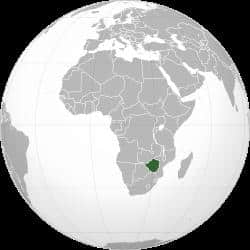
For rare earth investors, the subtext matters more than the soundbite.
What’s Solid Beneath the Rhetoric
Zimbabwe is genuinely mineral-rich. Beyond lithium, iron, and ferrochrome—where Italian firms such as WeBuild, Red Graniti, and Bagnara already operate—the country does host rare earth occurrences, often associated with alkaline complexes and pegmatitic systems. The ambassador is accurate in pointing out an existing Italian commercial footprint and a degree of institutional continuity compared with some regional peers.
It is also true that European governments are scanning Africa more deliberately as China’s grip on processing and magnet manufacturing hardens. From that perspective, Rome’s interest is neither novel nor isolated.
Where Optimism Runs Ahead of Infrastructure
What the ANSA piece does not interrogate is the gap between geological presence and supply-chain relevance. Zimbabwe today is not a producer of separated rare earth oxides at a commercial scale, nor does it host downstream processing, metalmaking, or magnet manufacturing. Any meaningful role in Europe’s rare earth strategy would require years of capital deployment, permitting, power infrastructure, and—critically—offtake certainty.
Stability, too, is relative. While Zimbabwe has avoided recent large-scale conflict, policy unpredictability, currency risk, and regulatory opacity remain material considerations for long-horizon mining and processing investments. These are not disqualifiers, but they are not footnotes.
Importantly, China is known to do a lot of business in Zimbabwe. China is extensively and actively involved in the Zimbabwean mining industry, with Chinese investors controlling an estimated 90% of the sector. Chinese companies have invested billions of dollars to acquire and develop mines, particularly for critical minerals like lithium, but also for gold, coal, iron ore, and chrome.
Reading the Diplomatic Tea Leaves
The tone of today’s Italian coverage reflects its source: a wire-service account amplifying an ambassador’s mandate to encourage engagement. That does not make it inaccurate—but it does make it incomplete. There is no evidence here of signed MOUs, project-level commitments, or downstream integration plans. This is market courtship, not market entry.
Why This Still Matters
What’s notable is not Zimbabwe’s rare earth potential per se, but Europe’s widening aperture. Italy’s comments fit a broader pattern: EU states testing new jurisdictions early before supply stress forces rushed decisions.
For investors, the takeaway is discipline. Watch for projects, partners, and processing plans—not just mineral maps and diplomatic enthusiasm.
What about the future of Zimbabwe rare earth policy?
Zimbabwe Rare Earth ‘Nationalization’?
Farai Nyika (opens in a new tab) (MANCOSA, Durban, South Africa), with co-author Meshel Muzuva, argues in a 2025 paper (opens in a new tab) that Zimbabwe should treat rare earths as a strategic lever for industrialization, sustainable trade, and economic development in the era of the energy transition and the Fourth Industrial Revolution (4IR).
Using a qualitative, document-based content analysis (government, corporate, and academic sources), the authors propose a policy framework for the southern African nation built on four reinforcing pillars: partnerships and security considerations; governance quality; accountability and ethics; and sustainable international trade. The paper situates Zimbabwe’s opportunity within global supply-chain concentration (especially downstream separation/refining), volatile rare earth pricing, and rising geopolitical competition for critical minerals.
Nyika ultimately recommends a forceful beneficiation-first strategy: nationalize Zimbabwe’s rare earths, allow minority private partners to help build domestic 4IR manufacturing capacity, and prioritize domestic needs before exports, aiming to export finished 4IR products rather than raw materials.
The authors emphasize that outcomes depend less on geology than on institutions—calling for stronger governance, transparency, and anti-corruption measures (including joining the Extractive Industries Transparency Initiative), plus sustainable mining practices aligned with ESG expectations.
In short, the study is less a technical mining roadmap than a governance-and-industrial-policy playbook designed to prevent Zimbabwe from repeating the “raw-export” pattern and instead capture higher-value stages of the rare earth supply chain. How will reality unfold in Zimbabwe in the era of critical mineral and rare earth supply chain geopolitics?
© 2025 Rare Earth Exchanges™ – Accelerating Transparency, Accuracy, and Insight Across the Rare Earth & Critical Minerals Supply Chain.


0 Comments