
Highlights
- Ucore Rare Metals targets mid-2026 to begin commercial heavy rare earth processing at its Strategic Metals Complex in Louisiana.
- The project is backed by 5,700+ hours of automated RapidSX demonstration operations in Ontario.
- The company's phased 2,000-5,000 tpa ramp strategy aims to build midstream separation capacity—North America's critical supply chain gap.
- Partnerships with Vacuumschmelze, eVAC Magnetics, and Hastings Technology Metals support the strategy.
- With $36.3M conditional Canadian government support and a brownfield site approach, Ucore must now prove RapidSX can scale from demonstration success to sustained commercial durability.
After years of pilot work and partnership-building, Ucore Rare Metals (opens in a new tab) is positioning itself to cross a rare threshold in North American rare earths: moving from demonstration to commercial separation. The company now targets 2026 for initial heavy rare earth processing at its Strategic Metals Complex (SMC) in Louisiana (opens in a new tab)—a goal that remains ambitious, but no longer reads as speculative theater.
Table of Contents
From Lab Bench to Clock Speed
What’s solid: Ucore reports roughly 5,700 hours of continuous processing since late 2023 using its RapidSX separation technology at its Kingston, Ontario demonstration plant. Operated in an automated, simulated 24/7 environment, the system processed tons of heavy mixed rare earth oxides across a 52-stage separation flow sheet according to an entry in Magnetics Business & Technology (opens in a new tab).
That matters. Separation—not mining—remains the real bottleneck in the global rare earth supply chain. Demonstration hours under quasi-commercial conditions carry more weight than isolated metallurgical claims.
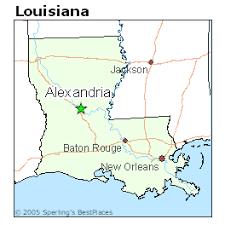
Still, investors should keep the distinction clear: demonstration success is not the same as sustained commercial uptime. The planned mid-2026 installation of RapidSX Machine #1 in Alexandria, Louisiana, is the true proving ground.
Scale With a Seatbelt
Ucore’s phased ramp—2,000 tpa in 2026, rising to 5,000 tpa in 2027—signals discipline rather than bravado. The brownfield site at England Airpark lowers execution risk, and the “one-machine-first” strategy limits capital shock.
This is not a moonshot refinery. It is a measured attempt to industrialize separation inside the United States, where meaningful midstream capacity is still scarce.
Allied Supply Chain, Not Just Optics
The memorandum of understanding with Vacuumschmelze GmbH and eVAC Magnetics is directionally important, linking oxide separation to downstream magnet manufacturing—precisely where Western supply chains tend to fracture.
Likewise, the non-binding agreement with Hastings Technology Metals and Wyloo Gascoyne Pty ties Australian Yangibana concentrate to U.S. midstream processing. These are pathways, not guarantees—but they follow the logic of bankable supply chains.
Public Money, Private Execution
The conditional $36.3M in Canadian government support for samarium and gadolinium refining is a meaningful endorsement, particularly as China tightens restrictions on those elements. Still, conditional funding is not cash flow, and timelines matter.
Why This Matters
Ucore’s story is notable not because it promises scale, but because it targets processing sovereignty. The risk is execution. Can its RapidSX refining technology scale up? The bias to watch is optimism drift between demonstration and durability as the technology still must be validated at scale.
North America does not need another rare earth headline. It needs separators that run.
©!-- /wp:paragraph -->


0 Comments