
Highlights
- NIO produced its one-millionth EV in January 2026.
- NIO delivered 326,000 vehicles in 2025, marking a 46.9% year-over-year increase.
- NIO is likely to achieve its first quarterly profit in Q4 2025 as vehicle margins reach 18%.
- China controls 60% of rare earth mining, 90% of refining, and 85% of global lithium-ion battery production.
- This control provides China with strategic leverage over EV supply chains, allowing Beijing to influence Western automakers.
- NIO's success is a reflection of state-backed industrial policy.
- China's EV sector faces challenges such as overproduction, price wars, and export tensions.
- The capacity in China's EV sector is outpacing demand, risking systemic oversupply and trade friction internationally.
NIO’s (opens in a new tab) one-millionth vehicle (a new ES8 electric SUV) rolls off the line in Hefei, Anhui Province on Jan. 6, 2026. The milestone underscores China's rapid progress in electric vehicle manufacturing.
NIO ET5
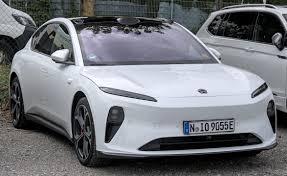
NIO is a leading Chinese premium electric vehicle (EV) manufacturer, founded in 2014, known for its smart EVs, innovative battery-swapping technology (Power Swap Stations), and strong user community, offering SUVs and sedans with advanced tech, plus services like home charging and mobile charging vans, aiming for sustainable mobility with brands like ONVO and Firefly for different markets.
Table of Contents
NIO Hits One Million – Driving Toward Profitability
Chinese electric vehicle maker NIO celebrated (opens in a new tab) a major milestone as its one-millionth mass-produced EV rolled off the assembly line in Hefei on January 6, 2026. Founder and CEO William Li (Li Bin) hailed it as “a new starting point,” marking NIO’s entry into a third phase focused on high-quality growth. The company’s journey—from its first ES8 SUV in 2018 to a multi-brand strategy spanning the premium NIO marque, the mid-range ONVO (formerly “Ledo”), and the entry-level Firefly—reflects the breakneck pace of China’s EV sector. NIO delivered 326,000 vehicles in 2025, a record high and a 46.9% jump year-on-year, and it is targeting 40–50% annual growth going forward.
This scale is beginning to translate into financial improvements. After years of heavy investment, Li Bin expressed confidence (opens in a new tab) that NIO achieved its first quarterly profit in Q4 2025. Higher-margin models like the new ES8 boosted vehicle gross margin to an estimated 18% in Q4 (up from 13% in Q3) – likely enough to turn a net profit. “We lost 2.7 billion yuan in Q3,” Li noted (opens in a new tab), but surging deliveries of a more profitable product mix mean “there is a possibility of profitability” in Q4.
Final audited results are pending, but analysts concur that NIO likely hit its non-GAAP breakeven target in the quarter. This financial milestone would validate NIO’s strategy of scaling up and cutting costs, and it underscores how far China’s EV champions have come in challenging Western rivals. (By comparison, Li pointed out that an American competitor – Tesla – has produced over 9 million EVs to date, suggesting plenty of room for Chinese brands to catch up.)
Industrial Policy Driven by the State
NIO’s rise has been enabled by a tightly coordinated domestic ecosystem rather than company execution alone. All one million NIO vehicles have been produced in Anhui province, where the Hefei municipal government provided early financial and industrial support during the company’s most capital-intensive years. Since its inception, NIO has invested more than ¥65 billion (≈$10 billion) in R&D across batteries, autonomous driving, and vehicle software, and another ¥18 billion in building charging and battery-swap infrastructure, now totaling more than 8,500 stations nationwide.
In late 2025, NIO deepened this model by signing a five-year strategic partnership with CATL to co-develop long-life batteries, battery-swap technologies, and shared standards. The takeaway for Western observers is clear: NIO’s success is not simply corporate—it reflects China’s deliberate strategy to control the EV value chain from ground to grid.
The Supply Chain
That strategy begins upstream. Electric vehicles depend on lithium for batteries and rare earth elements—especially neodymium, dysprosium, and terbium—for electric motors. China spent decades securing dominance in these materials.
Today, it controls roughly 60% of global rare-earth mining and more than 90% of refining capacity. Even more strategically, Chinese firms produce over 90% of neodymium-iron-boron (NdFeB) magnets, the critical component inside EV motors, wind turbines, and advanced defense systems. This dominance was not accidental; it reflects forty years of state-backed investment, environmental tradeoffs, and deliberate underpricing to eliminate foreign competitors.
A Strategic Moat
The result is a powerful strategic moat. China’s grip on rare earths gives it pricing power and leverage across industries central to the energy transition and national security. This leverage is no longer theoretical. In 2025, Beijing tightened export controls on certain rare earths, magnet technologies, and battery-grade metals—signaling its ability to constrain global supply chains if geopolitical tensions escalate. Western automakers and governments now face the reality that most “green” and high-tech supply chains—from EVs to aerospace—run through China.
Crucially, China seeks to monetize control at every stage. Secure access to critical minerals has enabled world-leading midstream and downstream industries. Chinese firms supply over half of global EV batteries, and China produces roughly 85% of the world’s lithium-ion batteries. This vertical integration allows China to capture outsized value, while Western automakers increasingly resemble assemblers dependent on Chinese inputs.
Meta Plan?
China’s ambition extends further downstream into finance. Policy documents reviewed by _Rare Earth Exchanges_™ show that Beijing views critical minerals as strategic anchors for shaping future trade and monetary systems. In 2025, this vision took tangible form when Ant Group, China’s central bank, and the state-owned China Rare Earth Group launched a pilot rare-earth-backed digital currency, pegged to the yuan and settled via blockchain. The implication is profound: as China supplies the majority of rare earths, it can increasingly compel buyers to transact in RMB, accelerating currency internationalization and weakening dollar dominance.
Emerging Crises
NIO’s one-millionth vehicle milestone is impressive—but it also highlights a mounting surplus and overproduction crisis across China’s EV sector. Capacity expansion, fueled by state subsidies, local-government backing, and vertically integrated supply chains, has outpaced both domestic demand growth and sustainable export absorption.
Dozens of Chinese EV makers are now competing in a market where price wars, inventory buildup, and margin compression are intensifying, even as production lines keep running to preserve employment and amortize sunk capital. Companies like NIO may be approaching breakeven, but sector-wide profitability remains fragile, with excess output increasingly pushed into foreign markets at aggressive pricing—triggering trade friction in Europe and North America.
Compared with Tesla, which has globalized demand alongside capacity, China’s model risks turning industrial success into systemic oversupply, forcing consolidation at home while exporting deflationary pressure abroad. In short, China’s EV triumph is now colliding with the hard limits of demand, pricing power, and geopolitics—an imbalance that markets, not milestones, will ultimately resolve.
Bottom Line
For investors and policymakers, NIO’s one-millionth vehicle is more than a corporate milestone. It is a visible marker of a broader Chinese strategy that links resource control, industrial dominance, infrastructure scale, and digital finance into a single system of leverage. Each EV rolling out of Hefei carries not just a battery—but a blueprint.
©!-- /wp:paragraph -->


0 Comments