
Highlights
- The U.S. Department of Energy awarded $900 million to Orano, part of a $2.7 billion total, to build a next-generation uranium enrichment facility in Oak Ridge, Tennessee.
- This project marks the first serious attempt to reclaim sovereign control over uranium enrichment capability since the Cold War.
- Orano is one of only four entities globally capable of industrial-scale uranium enrichment.
- Project IKE will be developed to replace Russian-supplied enriched uranium, which currently fuels a significant portion of U.S. reactors but will be prohibited by 2028.
- The facility signifies a strategic shift in U.S. industrial policy, addressing decades of outsourced nuclear fuel cycle dependence.
- This initiative is part of a broader Western re-industrialization pattern across semiconductors, batteries, rare earths, and nuclear fuel.
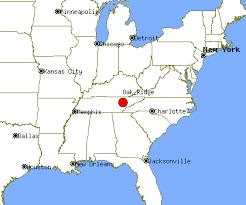
The U.S. Department of Energy’s decision to award $900 million (opens in a new tab) to Orano (opens in a new tab) (and a total of $2.7 billion (opens in a new tab)) to help build a new uranium enrichment facility in Oak Ridge, Tennessee is not just an energy headline. It is a geopolitical correction—and one of the most consequential industrial policy moves Washington has made in the nuclear sector in decades.
For the first time since the Cold War, the United States is making a serious, capital-backed attempt to reclaim sovereign control over uranium enrichment, a critical choke point in the global energy and security system.
Table of Contents
The Project: What Is the Orano Building?
Orano’s Project IKE (named for Eisenhower’s “Atoms for Peace”) is a next-generation gas centrifuge uranium enrichment facility, ultimately envisioned as a $5 billion industrial complex. The DOE award de-risks early phases—licensing, site development, and initial construction—while private capital completes the build-out.
Key facts:
- Location: Oak Ridge, Tennessee (historic center of U.S. nuclear science)
- Product: Low-Enriched Uranium (LEU) for commercial nuclear reactors
- Timeline: NRC licensing submission in 2026; first production targeted around 2031
- Jobs: ~1,000 construction jobs, ~300 permanent high-skill positions
The facility is designed to replace Russian-supplied enriched uranium, which still fuels a meaningful portion of U.S. reactors but will be legally prohibited by 2028 under U.S. law.
Why Orano?
Orano officially re-emerged with its current name and structure in January 2018, following a major restructuring of its predecessor, the French nuclear conglomerate Areva, which was founded in 2001. It is not a startup, a speculative technology play, or a policy experiment. It is one of only four entities globally capable of enriching uranium at an industrial scale.
- Orano operates the Georges Besse II enrichment plant in France, one of the world’s most advanced centrifuge facilities.
- That plant currently supplies roughly 12% of global enrichment capacity and is expanding toward ~16%.
- Orano is the only Western company in the last 15 years to successfully build and commission a new large-scale enrichment plant.
In short, when the U.S. needed a partner that could actually deliver, Orano was the credible choice.
Why This Matters: The Quiet Crisis in U.S. Uranium Supply
For years, America quietly outsourced the nuclear fuel cycle:
- Mining: U.S. uranium production collapsed to near zero by 2020.
- Conversion: The sole U.S. conversion facility was idle for several years.
- Enrichment: Roughly 70% of U.S. enrichment services were imported, with Russia supplying up to a quarter.
This arrangement persisted when geopolitics were stable. That era is over.
Since 2022, uranium has been reclassified—implicitly if not formally—as a strategic material. The response has been swift:
- The U.S. restarted its uranium conversion facility in Illinois.
- DOE-funded HALEU enrichment for next-generation reactors.
- In January 2026, DOE committed $2.7 billion to rebuild domestic enrichment capacity—splitting awards among Orano, Centrus, and General Matter.
Project IKE functions as the anchor tenant of that national strategy.
The Global Reality: Who Controls Uranium Enrichment?
The enrichment market is highly concentrated:
- Russia (Rosatom): ~40–45% of global capacity
- Urenco (UK–EU–US): ~30%
- Orano (France): ~12–16% (growing)
- China (CNNC): ~13–15%, largely for domestic use
Four players control nearly 90% of global enrichment capacity.
For decades, Russia functioned as the system’s “backstop”—cheap, reliable, and politically tolerated. Western dependence accumulated quietly. When sanctions and supply risk emerged, the vulnerability became unavoidable.
China and Russia: Energy First, Weapons Second
Despite popular narratives, over 90% of enriched uranium in both Russia and China is used for civilian nuclear energy, not weapons.
- Russia fuels its domestic fleet and dozens of reactors abroad; military usage is marginal relative to commercial volumes.
- China’s enrichment capacity is overwhelmingly absorbed by its rapidly expanding reactor fleet.
This is precisely why enrichment matters: control energy, control leverage.
The Bigger Meaning: A Pattern Is Emerging
Orano’s award fits a broader Western re-industrialization pattern:
- Rare earths (processing, magnets)
- Semiconductors (fabs, advanced packaging)
- Batteries (materials, refining)
- Nuclear fuel (conversion, enrichment)
Across sectors, the same lesson is being relearned: sovereignty lives in midstream and downstream processing, not merely in raw materials.
REEx Take
Project IKE will not come online overnight. It will not eliminate import dependence tomorrow. But it does something more important:
It restarts the American enrichment clock.
When Oak Ridge centrifuges begin spinning in the early 2030s, the United States will once again possess a full-spectrum nuclear fuel option—commercially viable, allied-aligned, and strategically sovereign.
That makes this DOE award more than an energy investment.
It is a statement of intent.
©!-- /wp:paragraph -->


0 Comments