
Rare earth permanent magnets are critical components in modern U.S. military technology due to their exceptional strength and heat-resistant properties. These magnets, primarily neodymium-iron-boron (NdFeB) and samarium-cobalt (SmCo) types, enable a wide range of defense capabilities – from electric motors and actuators in aircraft, to precision-guided munitions and satellite systems.
All branches of the U.S. military (Army, Navy, Air Force, Marine Corps, and Space Force) rely on rare earth magnets in major assets, including fighter jets, naval vessels, armored vehicles, missile systems, and space platforms.
In fact, the Department of Defense (DoD) has noted that approximately 78% of U.S. weapons programs contain components that depend on rare earth magnets.
Let's dig in.
Table of Contents
What are the rare earth elements in defense technology?
Rare earth magnets are prized for their high magnetic energy density and thermal stability, which allows them to maintain strength under demanding conditions. These properties make NdFeB and SmCo magnets indispensable in military hardware:
Neodymium-Iron-Boron (NdFeB)
Neodymium magnets are among the strongest known. They are widely used in electric motors, generators, and actuators for vehicles, aircraft, and drones. For example, each motor in a drone contains dozens of NdFeB magnets; a single multi-rotor UAV can use hundreds of such magnets (opens in a new tab).
NdFeB magnets (often alloyed with praseodymium and enhanced with dysprosium or terbium for heat resistance) also appear in radar systems – powerful microwave tubes employ these magnets to focus energy, and without them, many military radars “cannot function”.
Samarium-Cobalt (SmCo)
SmCo magnets are slightly weaker in raw strength but excel in high-temperature performance and corrosion resistance. They are used in jet engines, avionics, and missile components where heat is extreme. Defense contractor Lockheed Martin is the largest U.S. consumer of samarium; an F-35 Lightning II fighter alone contains approximately 50 pounds of SmCo magnets to handle the heat in its engine and power systems. SmCo magnets remain stable at temperatures that would demagnetize other types, which is crucial for next-generation aircraft and weapons.
Both types of magnets are widely used in military equipment. Rare earth magnets are used to generate electricity in onboard power systems, drive servomotors for flight control surfaces, and direct precision munitions.
For instance, NdFeB magnets provide the torque in electric actuators that replaced hydraulics in modern jets, and SmCo magnets are found in the F-35’s turbomachine and pumps. Even seemingly small components rely on them – guided artillery shells and smart bombs use miniature permanent magnets in their guidance fins to steer in flight. If a system involves electric motion, sensing, or high-powered electromagnetic emission, rare earth magnets are likely at its core.
What is the impact of the DFARS magnet mandate?
The DFARS magnet mandate is a set of U.S. Department of Defense regulations, specifically DFARS 225.7018, that restricts the procurement of certain rare earth magnets and related metals (including tungsten and tantalum) for defense contracts when sourced from specific countries. Initially focused on preventing sourcing from China, Russia, North Korea, and Iran, these rules have been expanded by recent DoD final rules, effective January 1, 2027, to prohibit the entire supply chain, from mining to production, of these materials in covered countries.
What the Mandate Does
- Restricts Sourcing: Prohibits the acquisition of specific magnets (neodymium-iron-boron and samarium-cobalt) and metals (tungsten, tantalum) for U.S. defense contracts from certain "covered countries".
- Expands Supply Chain Focus: Beginning in January 2027, the restriction will apply to the entire supply chain, including mining, refining, and separation of the materials in said countries.
- Alters COTS Exception: The exception for commercially available off-the-shelf (COTS) items is limited, changing from 50% tungsten to 50% covered material by weight, effective January 1, 2027.
- Promotes Domestic Supply: The goal is to encourage on-shoring and develop a domestic industrial base for these critical materials.
Covered Materials
- Neodymium-iron-boron (NdFeB) magnets
- Samarium-cobalt (SmCo) magnets
- Tungsten (including metal powder and heavy alloy)
- Tantalum (including metals and alloys).
Covered Countries
- North Korea
- China
- Russia
- Iran
Key Dates
(opens in a new tab)January 1, 2027: (opens in a new tab)The updated rule, expanding restrictions back to the mining stage, takes effect for tantalum metals and tungsten.
(opens in a new tab)January 1, 2026: (opens in a new tab)The prohibition on the production of covered magnets and metals within covered countries goes into effect.
REE Magnet Usage Across Major Military Assets
All branches and domains of the U.S. military extensively utilize rare earth magnets. Below is an analysis by category of major assets, with examples of magnet content and applications:
1. Aircraft and Avionics (Air Force, Navy, Marines)
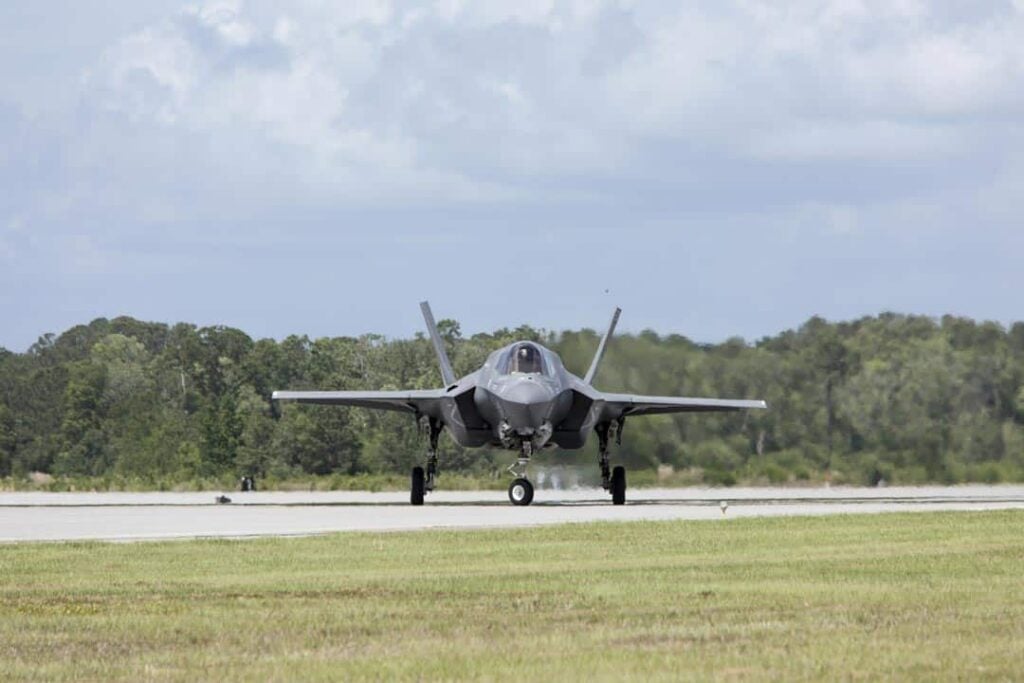
Fighter jets, bombers, transport planes, and helicopters all contain numerous rare-earth magnets. The F-35 Lightning II, used by the Air Force, Navy, and Marine Corps, is a prime example – it requires over 900 pounds of rare earth materials per aircraft, much of which is in permanent magnets for its electric actuation systems, radar, and engine.
Its electric flight controls, pumps, and sensors all leverage these magnets. (Notably, a single F-35 was found to have a Chinese-made SmCo alloy in a turbomachine pump, prompting scrutiny of magnet sourcing.) Legacy fighters (F-16, F/A-18) and modern stealth aircraft (B-2, B-21 bombers) similarly use NdFeB magnets in radar and targeting systems, and SmCo magnets in engine and thermal applications.
Avionics components like radar modules, navigation systems, and helmet displays often incorporate rare earth magnets for motion control and signal processing.
2. Unmanned Aerial Vehicles (UAVs)
Drones and unmanned systems across services (Air Force MQ-9 Reapers, Army Gray Eagles, Navy MQ-4 Tritons, etc.) are high-volume magnet consumers. Electrically driven propellers and gimballed sensors mean dozens of NdFeB magnets per motor. A typical quadcopter-style drone motor uses between 12 and 60 NdFeB magnets, and with up to 8 motors per UAV, even a single drone can contain several hundred magnets.
The Predator/Reaper class UAVs, which have larger propeller engines and extensive onboard electronics, similarly rely on permanent magnets in their alternators and control actuators. As the military expands drone fleets, magnet usage in this category is substantial.

3. Naval Vessels and Submarines (Navy)
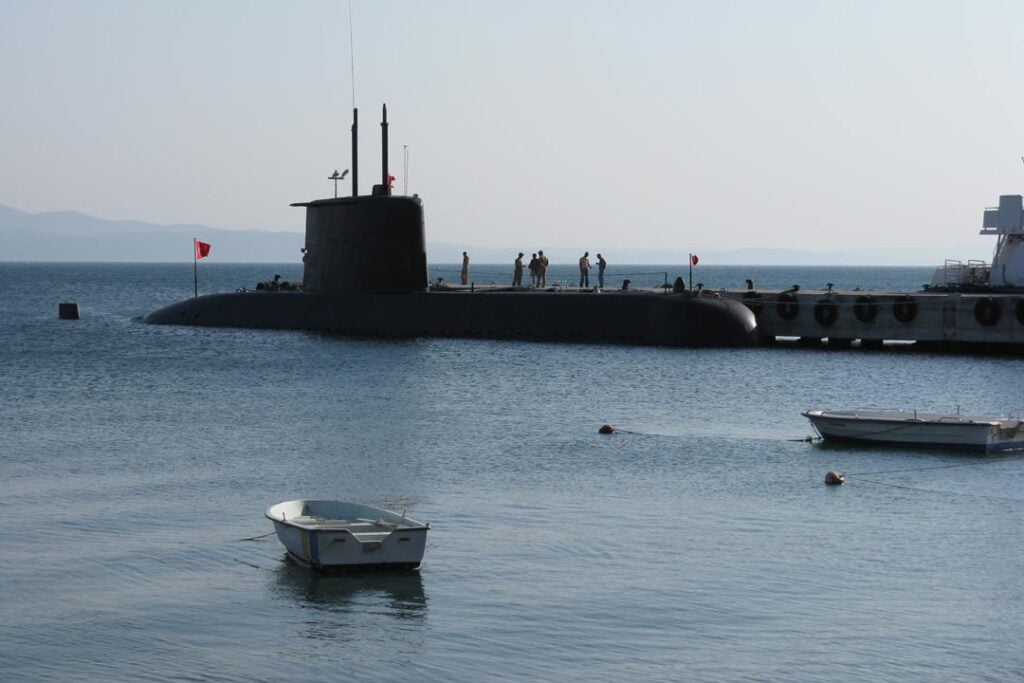
The Navy’s ships and submarines are among the largest consumers of rare earth magnets by sheer weight. Modern warships use electric drive propulsion, advanced radars, and sonar transducers, all of which depend on powerful magnets.
For example, an Arleigh Burke–class destroyer contains roughly 5,200 pounds of rare earth elements, used in everything from the Aegis radar’s high-power microwave tubes to the ship’s propulsion and steering motors.
Nuclear submarines use even more: a Virginia-class attack submarine requires about 9,200 pounds of rare earth materials. These subs incorporate large permanent-magnet motors for quieter electric propulsion, and their sonar arrays and guidance systems also utilize magnets. (The upcoming Columbia-class ballistic submarines are expected to have similar or greater rare earth magnet content due to even larger electric drive systems.)
Additionally, naval sonar and radar systems critically depend on magnets – a Navy official noted that rare earth magnets in radar microwave tubes are irreplaceable for focusing energy in systems like the SPY-1/SPY-6 Aegis radars. Without these magnets, the core sensing capabilities of ships would be degraded.
4. Ground Vehicles and Army Systems (Army, Marines)
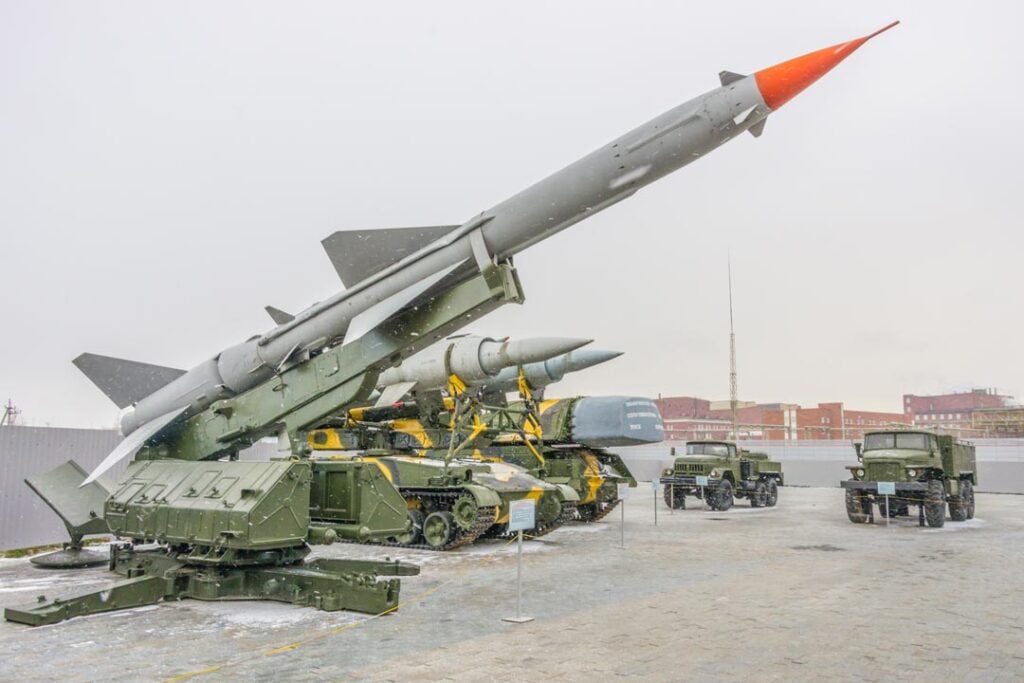
Traditional armored vehicles (e.g., the M1 Abrams tank) have fewer rare earth magnets than aircraft or ships, but their subsystems still use them.
The Abrams’ navigation, targeting, and fire-control systems include rare earth components; for instance, Nd: YAG lasers in rangefinders utilize neodymium (a rare earth element, although not in magnetic form), and stabilization servos may employ permanent magnets. Portable laser target designators and night vision devices used by Army and Marine units also contain rare earth elements.
Looking ahead, the Army’s push for hybrid-electric drive vehicles and electric propulsion (for quieter operation and reduced logistical fuel burden) will significantly increase magnet content. A hybrid electric Bradley fighting vehicle or JLTV (Joint Light Tactical Vehicle) would need large NdFeB traction motor magnets similar to commercial electric vehicles.
Although current Army vehicle fleets are mostly conventional, emerging programs (e.g., the Optionally Manned Fighting Vehicle, electric light recon vehicles) signal growing magnet demand in the ground team programs.

5. Missiles, Munitions, and Missile Defense
Precision-guided munitions are pervasive magnet consumers across all services. The Joint Direct Attack Munition (JDAM) (opens in a new tab) guidance kit, used by Air Force and Navy to convert bombs into smart weapons, contains rare earth magnets in its fin actuation system. The Navy’s Tomahawk cruise missiles use rare earth magnets in their navigation and control systems.
The Army’s Patriot air defense missiles, Stinger MANPADS, Javelin anti-tank missiles, and others all rely on compact actuators and sensors stabilized by permanent magnets. Even smart artillery shells (like the Excalibur guided projectile) use magnets to adjust fins for course correction.
In missile defense radars (such as the AN/TPY-2 or Aegis BMD), powerful rare earth magnets help generate and steer radar beams. Thus, every branch’s munitions – Air Force air-to-air missiles, Navy ship-launched missiles, Army rockets – depend on magnets for guidance and control to hit their targets.
6. Space Systems (Space Force and others)
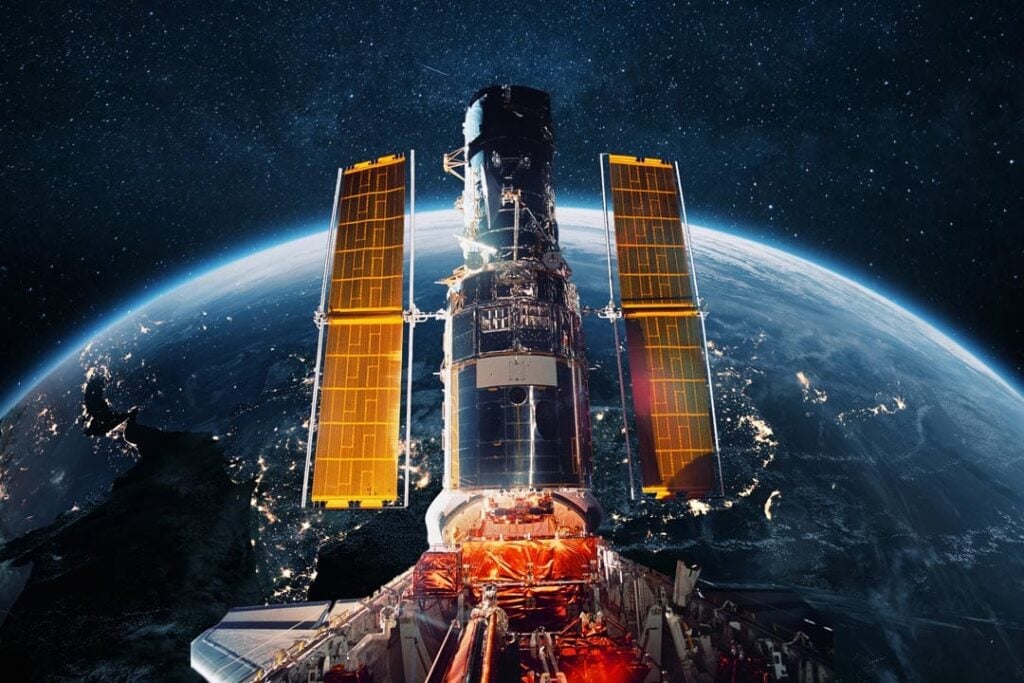
Satellites and space-based systems rely on rare earth magnets for attitude control and other functions. Reaction wheel assemblies (opens in a new tab), which help orient satellites, use electric motors built with NdFeB magnets to spin flywheels.
Magnetic torque rods (opens in a new tab) (devices that interact with Earth’s magnetic field for satellite orientation) also contain ferromagnetic cores (though often soft magnets).
Every GPS satellite, military communications satellite, or surveillance satellite likely carries multiple rare earth magnets in its reaction wheels, control moment gyros, and electric propulsion systems (for those satellites that use ion thrusters powered by magnetics).
Additionally, the drive mechanisms in space sensors or antenna pointing systems often utilize SmCo or NdFeB magnets for reliable operation in the space vacuum. As the Space Force expands satellite constellations (e.g. new missile-warning satellites, GPS III, etc.), the cumulative magnet requirement grows correspondingly. While each satellite uses on the order of a few kilograms or less of magnets, the dozens of satellites deployed mean the Space Force is an important, if smaller, contributor to overall demand.
Estimated rare earth content for several major military defense applications:
| Platform/Weapon System | Approx. Rare Earth Content per unit | Notes on Magnet Usage |
|---|---|---|
| F-35 Lightning II (5th-gen fighter jet, USAF/USN/USMC) | >900 lbs rare earth elements per aircraft (including ~50 lbs Sm–Co magnets) | NdFeB and SmCo magnets in electric actuators, pumps, generators, radar, and engine subsystems. Critical for flight control, targeting, and power systems. |
| Virginia-class Submarine (USN attack sub) | ~9,200 lbs rare earth elements per submarine | Extensive NdFeB magnets in electric drive propulsion motors, pump systems, and sonar transducers. Enables quiet propulsion and high-performance sensing underwater. |
| Arleigh Burke DDG-51 Destroyer (USN) | ~5,200 lbs rare earth elements per ship | Large NdFeB magnets in radar systems (Aegis), electric motors for propulsion and steering, and anti-submarine warfare sensors. SmCo used in high-temperature electronics. |
| Tomahawk Cruise Missile (USN) | Few pounds (exact not public) – contains NdFeB/SmCo magnets in guidance system | Uses rare earth magnets in its onboard navigation, seeker, and control actuators to precisely guide the missile to target. Each missile uses multiple small magnets for fin control and sensor stabilization. |
| MQ-9 Reaper UAV (USAF) | Several dozen pounds (est.) across motors and sensors | Electric propulsion and sensor gimbals contain hundreds of NdFeB magnets. For example, each of its propeller’s motor/generator components and sensor turrets use permanent magnets for operation. |
| M1A2 Abrams Tank (USA) | Single-digit pounds (est.) in electronic components | Contains NdFeB magnets in turret drive motors, targeting sensors, and communications equipment. Also uses rare-earth-doped laser rangefinders (neodymium lasers), though those are not permanent magnets. Future hybrid tank propulsion would drastically increase magnet content. |
High-tech platforms like advanced aircraft and submarines contain hundreds or thousands of pounds of rare earth materials, largely in magnet form. Even smaller systems (missiles, drones) collectively contribute significant magnet demand when produced in large quantities. The F-35, Virginia submarines, and Aegis-equipped warships stand out as magnet-intensive platforms that drive much of the Department of Defense’s overall requirement.
Total Volume of Rare Earth Magnets Required (Annual Demand)
Quantifying the U.S. military’s total rare earth magnet needs is challenging, but available estimates illustrate the large scale. In the early 2010s, the Pentagon’s annual requirement for permanent magnets was already on the order of 1,000 tons per year. Since then, demand has risen significantly as more magnet-rich systems (like the F-35 and new Navy ships) entered service.
Recent analyses indicate that current U.S. defense consumption is roughly 3,000 to 4,000 tons of rare earth magnets per year. This includes magnets across all branches and applications – from the biggest ship motors down to the smallest missile components.
To put that in perspective, 3,000–4,000 tons is approximately the magnet volume needed to supply all ongoing U.S. military production and maintenance annually. (For comparison, one report noted this is about triple the capacity of the only U.S. magnet plant coming online, and still a small fraction of China’s ~300,000 ton/year magnet output). The
Government Accountability Office (GAO) and other watchdogs have highlighted that the U.S. remains heavily import-dependent for these magnets – over 95% of total U.S. rare earth consumption is imported, mostly from China. Thus, essentially all 3,000+ tons of magnets the DoD needs each year are sourced from foreign supply chains, a strategic vulnerability noted in Congressional testimony and audits.
Within the DoD’s annual magnet usage, certain platforms “consume” a larger share of the tonnage: production of each F-35, for example, uses hundreds of pounds of magnets; each new Navy destroyer or submarine uses several thousand pounds.
More still, maintenance and spare parts needs contribute to ongoing demand – e.g. replacement of electric motor parts, radar components, and so forth in existing systems requires a steady influx of magnets for repairs and upgrades. The support infrastructure like training simulators, test equipment, and base power systems can also contain rare earth magnets (for example, high-end electric generators or MRI machines on bases use NdFeB magnets as well, though these might be outside of “weapons systems” counts).
Public reports consistently identify these key defense programs as top consumers of rare earth magnets by volume. Thousands of tons of NdFeB and SmCo magnets are needed by the U.S. armed forces each year to build and sustain its equipment. This figure underscores the magnitude of reliance on these critical materials.
Future Demand and Modernization Outlook
Looking ahead, the U.S. military’s rare earth magnet requirements are expected to grow substantially as forces modernize. The DoD and Department of Commerce project that by 2030, the Pentagon’s demand for specialized permanent magnets could reach approximately 10,000 tons per year. This is a dramatic increase anticipated over the next 5–7 years. Several factors are driving this growth:
Fleet Expansion and New Platforms
Procurement plans call for producing hundreds of additional F-35s (each with 900+ lbs of rare earth content) over the coming decade, as well as new B-21 stealth bombers, advanced drones, and other aircraft – all of which will heavily use magnets in their systems.
The Navy is introducing new Columbia-class submarines (which likely use even more magnet-rich systems than Virginia-class subs) and new frigates/destroyers with electric propulsion and advanced radars.
The Space Force will be launching more satellites for communications and surveillance. Each of these new platforms adds magnet demand on top of sustaining existing equipment.
Electrification and Technological Advances
Both military and commercial sectors are moving toward electrification, which requires an increase of magnet usage. The Army and Marine Corps are exploring hybrid-electric or fully electric tactical vehicles to reduce fuel dependency; any future electric tank or troop carrier would contain large electric motors (needing hefty NdFeB magnet assemblies similar to electric car motors).
The Navy’s newer ships use integrated electric propulsion and electromagnetic launch systems (e.g. Electromagnetic Aircraft Launch System on carriers) that involve powerful magnetic technologies.
The Air Force’s emphasis on more-electric aircraft (replacing hydraulic systems with electric) and directed-energy weapons (which use rare earth materials in lasers and power units) will also contribute to magnet demand. As an example, Lockheed Martin’s developing high-power laser weapons use rare earths like erbium and neodymium in the lasing media – while not magnets themselves, their power and cooling systems often include permanent magnets for motors and pumps.
Munitions Stockpiling and Upgrades
The Department of Defense is investing in ramping up munitions production (from missiles to artillery shells). Modern variants of these ordnance increasingly incorporate precision guidance or improved fuzing, each requiring small magnet-driven devices. A larger inventory of smart weapons means a higher cumulative need for magnets.
Additionally, upgrades like the new Seeker heads for missiles (e.g. improved AIM-260 air-to-air missiles or hypersonic glide vehicles) will likely use rare earth magnets in their sensors and control surfaces due to extreme performance requirements, further boosting per-unit magnet content.
Maintenance and Lifecycle Replacements
As legacy systems age, they may be retrofitted with newer subsystems that use permanent magnets (for example, retrofitting older aircraft with modern AESA radars (opens in a new tab) that use rare earth magnet components, or updating naval sonar). These improvements incrementally increase the magnets in use. Plus, simply maintaining a larger force structure (more planes, ships, etc.) year-over-year means more spares and replacements, translating to sustained higher magnet consumption.
The projection of 10,000 tons/year by 2030 for U.S. defense magnet needs highlights how quickly requirements could outpace domestic production. In fact, U.S. magnet manufacturing capacity is only a fraction of that: even with new factories coming online (e.g. MP Materials’ Texas magnet plant aiming for ~1,000 tons/year, Noveon Magnetics ~2,000 tons/year), meeting a 10,000-ton defense demand will be challenging.
Defense and industry officials have warned that demand could double by the mid-2030s across both military and commercial sectors. The military’s share of overall rare earth magnet use is relatively small compared to booming industries like electric vehicles, but its growth is steady and strategically critical.
To ensure future readiness, the Pentagon has set a goal to establish a fully domestic “mine-to-magnet” supply chain by 2027 capable of meeting all U.S. defense needs. This goal is spurred by national security concerns; starting in 2027, U.S. defense contractors will be banned from sourcing NdFeB or SmCo magnets from adversary countries (China, Russia, Iran, North Korea) under new procurement regulations. Achieving self-sufficiency by then will require not only matching current demand (~3-4 thousand tons) but also scaling for the future demand curve. The DoD has invested over $400 million since 2020 in domestic rare earth mining, refining, and magnet production projects, and Congress continues to push funding to bridge the gap.
However, as of 2025, the “scale gap” remains large – China produces an estimated 300,000 tons of NdFeB magnets annually, whereas U.S. capacity is only a few thousand tons at best. If the U.S. military indeed needs 10,000 tons of magnets by 2030, that would necessitate a several-fold increase in non-Chinese production in a short time frame. DoD officials have testified that the U.S. must expand domestic and allied production or risk equipment shortfalls if foreign supplies are cut.
The trend is clear: as the U.S. military modernizes – with more electrified systems, advanced sensors, and precision weapons – its appetite for rare earth magnets will continue to grow.
Projections show a sharp rise in demand through the end of this decade, potentially reaching tens of thousands of tons per year. This trajectory underscores the importance of ongoing efforts to secure reliable supplies of neodymium, samarium, dysprosium, terbium, and other magnet-critical elements, either through domestic production or diversified sourcing, to support future military needs.
Conclusion
Rare earth permanent magnets (especially NdFeB and SmCo types) have become indispensable ingredients of U.S. military power. From the Air Force’s cutting-edge fighters and drones, the Navy’s ships and submarines, the Army’s weapons and vehicles, to the Space Force’s satellites, these magnets enable the high performance and precision that modern defense systems require.
The U.S. military currently consumes on the order of 3,000–4,000 tons of rare earth magnets each year, and specific flagship platforms like the F-35 jet or Virginia-class sub each contain hundreds or thousands of pounds of rare earth materials. Neodymium-iron-boron magnets are the workhorse in motors and generators, while samarium-cobalt magnets fill high-heat niches – together supporting an enormous array of applications across all branches of the armed forces.
The demand for these magnets is poised to increase significantly, possibly tripling by 2030 to around 10,000 tons annually, as the U.S. military upgrades and expands its capabilities. Key growth drivers include the shift toward electric-drive technologies, the fielding of new magnet-intensive platforms, and the general proliferation of advanced electronics in warfare.
This growth comes with challenges:
- At present the U.S. remains heavily reliant on foreign (predominantly Chinese) sources for rare earth materials and magnets.
- The Department of Defense and Congress have recognized this strategic vulnerability, as evidenced by GAO audits and new regulations banning magnets from adversarial sources.
- Efforts are underway – including substantial investments and stockpiling – to bolster domestic supply chains and ensure that all branches of the U.S. military can obtain the rare earth magnets they need without disruption.
In conclusion, rare earth magnets form a small but mighty cornerstone of U.S. defense readiness. Quantitatively, the military’s annual magnet requirements can be measured in thousands of tons, and qualitatively, their presence is woven through nearly every critical system that gives U.S. forces a technological edge.
Continuing to secure and expand access to neodymium, samarium, and other magnet-critical rare earth elements will be vital for sustaining that edge as future demand accelerates. The available public information – from DoD and GAO reports to industry data – highlights both the immense scale of magnet usage in defense and the urgency of supporting that need through resilient supply chains.
Sources:
- GAO Report – Critical Materials: DOD Supply Chain Risks (Sept 2024)
- DoD Manufacturing Technology Program – Mine-to-Magnet Supply Chain News (Mar 2024)
- The Cipher Brief – Pentagon’s Rare Earth Problem (Walter Pincus column) (Sept 2024)
- Mining.com – U.S.-China and DoD Rare Earths Analysis (June 2025)
- Ahead-of-the-Herd – Rare Earths and DoD Magnet Demand (June 2025)
- Bloomberg (via Vulcan Elements) – “Money Flowing to US Rare Earths…” (Aug 2025)
- The Deep Dive – Pentagon Weaning Off Chinese Rare Earths (Sept 2025)
- Military.com – Trump Admin Investing in US Rare Earths (Aug 2025) (opens in a new tab)
- National Defense Magazine – Sourcing Rare Earth Magnets (NDIA commentary) (May 2024)