
Highlights
- Turkey's Energy Minister announces plans for a 570,000-tonne-per-year rare earth facility at Beylikova.
- The facility aims to produce 10,000 tons of REO annually.
- Turkey intends to position itself as a Europe-facing supply hub outside China.
- Current purity levels of 92-93% fall short of commercial requirements for magnets and electronics.
- Turkey lacks domestic separation plants and downstream capability.
- Significant technical investment is required to bridge the gap from ore to strategic materials.
- Beylikova holds an estimated 12.5 million tons of extractable REO.
- The deposit is complex, being low-grade, thorium-bearing, and light-REE dominant.
- Success depends on acquiring advanced separation expertise and disciplined execution beyond political ambition.
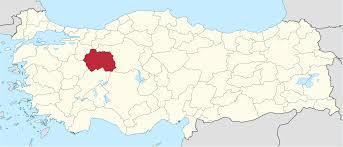
Türkiye’s energy minister has labeled 2026 a “critical year,” unveiling ambitions that span nuclear power, natural gas, hydrocarbons—and, notably, rare earth elements. For investors tracking the ex-China rare earth supply chain, the headline is Ankara’s plan to lay the foundation for a 570,000-tonne-per-year rare earth industrial facility at Beylikova (Eskişehir). Big numbers. Big intent. But what do they actually signal?

Table of Contents
The Big Claim: A Rare Earth Giant in the Making
In a televised interview, Alparslan Bayraktar (opens in a new tab), Türkiye’s Minister of Energy and Natural Resources, said the Beylikova project would advance at an industrial scale and that current rare earth output purity—reported at ~92–93%—is being improved. Framed optimistically, the project casts Türkiye as a potential Europe-facing rare earth hub at a moment when EU and NATO allies are actively seeking diversification away from China.
Minister Alparslan Bayrakta
What checks out:
- Beylikova is a known rare earth occurrence, long referenced in Turkish industrial plans.
- Türkiye has made credible upstream and midstream investments across energy and mining.
- Raising purity from low-90% levels is necessary progress—though it’s only an early step.
What’s not specified:
- No breakdown of REE mix (light vs. heavy) behind the 570,000-tonne figure.
- No clarity on separation depth, metal/alloy production, or downstream integration.
- No timeline to reach magnet-grade or MLCC-grade specifications, where strategic value concentrates.
Where Optimism Runs Ahead of Chemistry
Rare earth supply chains are not won by ore tonnage or nameplate capacity. They are won in separation chemistry, solvent systems, impurity control, and qualification. A purity level of ~92–93% is not commercially sufficient for magnets, capacitors, or defense electronics. Bridging the gap from “concentrate” to functional materials is a multi-year, capital-intensive journey—one China completed over decades.
This isn’t misinformation; it’s political optimism presented without the technical caveats investors need.
REEx Review
Türkiye is advancing plans for a REE industrial facility at Beylikova in Eskişehir, building on a recently launched pilot plant. In late 2023, officials announced that an initial pilot facility (inaugurated in April 2023) would process 1,200 tons of ore per year, and that a full-scale plant could eventually handle about 570,000 tons of rare earth ore annually (opens in a new tab). This capacity target – which traces back to statements by the nation’s Energy Ministry in 2022 – is projected to yield roughly 10,000 tons of rare earth oxides (REO) each year as cited in Bianet (opens in a new tab). State-affiliated media have reported that once the Beylikova operation scales up, it could generate around $220 million in annual revenue per a Daily Sabah (opens in a new tab) entry.
Leaders frame the project as a strategic leap to make Türkiye one of only a handful of countries producing REEs at scale. President Erdoğan and Energy Minister Alparslan Bayraktar have emphasized international partnerships for technology and investment, given that Turkey currently lacks domestic refining know-how and magnet manufacturing capacity. As reported (opens in a new tab) via Bianet, the cooperation memorandum signed with China’s Ministry of Natural Resources in 2024 is one example, aiming to import expertise for processing this resource. These moves underscore Ankara’s intent to integrate Beylikova’s output into high-tech supply chains (e.g. electric vehicles and wind turbines) and to reduce reliance on Chinese rare earth supplies, in line with Western diversification efforts.
Revisiting Türkiye’s rare earth endowment reveals both vast potential and practical constraints. The Beylikova deposit is frequently touted as the world’s second-largest REE reserve after China’s Bayan Obo, with an estimated 694 million tons of ore containing about 12.5 million tons of extractable rare earth oxides. This distinction is critical: early political messaging often conflated the total ore tonnage with actual REO content, exaggerating the country’s immediate production potential as reported by Rare Earth Exchanges. In reality, independent assessments indicate the ore grade is just over 1% REO – significant but not unprecedented – and formal JORC-compliant certification of the reserve is still pending.
Geologically, Beylikova’s ore is complex: the rare earths are interwoven with minerals like barite and fluorite, and accompanied by thorium (a radioactive element), which makes extraction and processing more challenging, as this media has called out.
Moreover, the deposit skews toward light REEs (e.g., lanthanum, cerium), whereas heavier and more valuable magnet metals (neodymium, praseodymium) are present in smaller quantities according to multiple accounts, such as in the Middle East Forum (opens in a new tab). Experts note that without substantial investment in advanced separation technology and environmental safeguards, Turkey could struggle to move beyond exporting low-value concentrates. Indeed, the nation currently has no commercial REE separation plant in operation according to Rare Earth Exchanges, so scaling Beylikova from “ore in the ground” to high-purity oxides and alloys will require new infrastructure, technical expertise, and rigorous oversight.
Nonetheless, if Ankara succeeds in reaching the 570,000 t/year processing capacity and develops downstream capabilities, analysts project Türkiye could supply a sizable share of the non-Chinese REE market and emerge as a key regional player. This would potentially allow Turkey to leverage its rare earth reserves for economic gain and geopolitical influence – but until then, Beylikova remains more of a promising reserve than a realized REE powerhouse.
Why This Still Matters on the Rare Earth Map
Despite the hype gap, the announcement matters. Türkiye sits at a geopolitical crossroads linking Europe, Central Asia, and the Middle East. If Ankara pairs Beylikova with best-in-class separation expertise, credible downstream partners, and disciplined execution, it could emerge as a secondary node in the ex-China rare earth ecosystem.
Without that follow-through, Beylikova risks becoming a familiar outcome in this sector: big deposits, small impact.
REEx Takeaway
This signals intent, not arrival. For rare earth investors, the opportunity hinges not on headline tonnage—but on whether Türkiye can cross the industry’s hardest bridge: from mineral to material, a substantial chasm, but with investment, expertise, and enduring national commitment, possible.
Source: Hürriyet Daily News (opens in a new tab), December 30, 2025
©!-- /wp:paragraph -->


0 Comments