
Highlights
- Political scholar Adekeye Adebajo claims approximately 30% of global rare earths are in Africa, but USGS data shows the continent holds only a low single-digit percentage of proven reserves—highlighting a critical distinction between rhetoric and resource reality.
- Nigeria, while resource-rich in oil and gas, is not a meaningful rare earth producer or central supply chain node, weakening the mineral-motive argument for potential U.S. military intervention.
- The conflation of 'critical minerals broadly' with 'rare earth elements specifically' creates market mispricing risk—investors must separate geopolitical narratives from empirical supply chain data.
In a December 22, 2025 commentary (opens in a new tab) published by The Gleaner, political scholar Adekeye Adebajo argues that President Donald Trump’s threat of military action against Nigeria may be driven, in part, by a “mercantilist quest for rare-earth minerals,” asserting that roughly 30% of global rare earths are located in Africa. Does an “imperialist” mindset remain endemic in DC?
Table of Contents
The Author: Adekeye Adebajo

The essay is forceful, historically literate, and morally charged—but for investors and policymakers operating in the rare earth space, that single statistic warrants scrutiny.
Because once minerals enter the argument, facts matter.
The Rare Earth Claim: Directionally Interesting, Numerically Weak
Africa is undeniably rich in critical minerals broadly defined—including cobalt, manganese, graphite, and platinum-group metals. But the specific claim that ~30% of global rare earths are located on the continent is not supported by the most credible public datasets.
According to U.S. Geological Survey reserve estimates and corroborating industry sources, Africa’s known rare earth reserves—primarily in countries such as Tanzania, South Africa, and Burundi—represent a low single-digit percentage of global reserves, not anything approaching 30%. Africa’s future potential is real, but proved reserves and operating supply chains remain limited.
What appears to be occurring is category slippage: a common conflation between critical minerals overall and rare earth elements specifically. In political commentary, that distinction is often blurred. In markets, it cannot be.
Nigeria: Strategic State, Not a Rare Earth Powerhouse
Nigeria is resource-rich—oil, gas, bitumen, tin, columbite—but it is not currently a meaningful rare earth producer, nor a central node in the global REE supply chain. There is no evidence that U.S. strategic planners view Nigeria as a near-term rare earth prize comparable to China, Australia, or emerging African projects elsewhere.
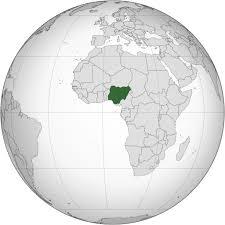
This does not invalidate Adebajo’s broader critique of imperial rhetoric or humanitarian pretexts. It does, however, weaken the mineral motive as framed.
Why This Still Matters for Investors
The lesson for Rare Earth Exchanges™ readers is not about Nigeria per se—it’s about how mineral narratives get weaponized. When geopolitical arguments borrow credibility from imprecise resource statistics, markets can misprice risk, policy intent, and opportunity. Minerals are increasingly cited as strategic motives. That makes precision a form of risk management.
Bottom Line
Adebajo’s essay is a powerful moral and political critique. But its rare earth claim is rhetorically useful, not empirically sound. Investors should separate resource reality from rhetorical leverage—especially when headlines hint at minerals as casus belli.
Source: Adekeye Adebajo, The Gleaner, December 22, 2025.
© 2025 Rare Earth Exchanges™ – Accelerating Transparency, Accuracy, and Insight Across the Rare Earth & Critical Minerals Supply Chain.


0 Comments