
Highlights
- The rare earth supply chain bottleneck is magnet production and refining, not mining—India's ₹7,280-crore plan targets 6,000 tonnes/year of sintered magnet capacity.
- China's dominance persists through chemical refining and magnet-making concentration, not just mineral deposits, making India's focus on magnets strategically sound.
- India's approach shows strategic maturity by targeting supply-chain risk at the magnet level where leverage actually sits, though execution remains uncertain.
An editorial from The Hindu lands on a rare point of clarity in the global rare earth debate: the real bottleneck in the rare earth supply chain is not as much mining. It is magnets (and of course, refining). And India, late in 2025, appears to have noticed.
Table of Contents
Where the Physics Actually Bites
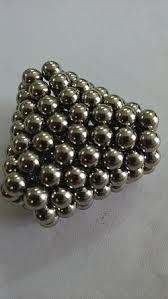
The opinion piece (opens in a new tab) correctly frames rare earth elements as gatekeepers, not bulk commodities. Only a narrow subset—most notably neodymium-iron-boron (NdFeB) permanent magnets—transmits supply shocks into electric vehicles, wind turbines, and advanced electronics. This is accurate and often misunderstood. When magnet supply tightens, entire clean-energy value chains feel it, regardless of how many “new mines” are announced elsewhere.
Equally sound is the comparison between refining and crude oil. Rare earth separation and processing—not extraction—determine strategic control. On this point, the editorial is precise: China’s dominance persists because chemical refining and magnet-making remain highly concentrated, even as deposits are discovered globally.
India’s Magnet Gambit: Substance Over Slogans
India’s ₹7,280-crore plan to build 6,000 tonnes per year of sintered rare earth magnet capacity is the most material news item here. This is not symbolic. It targets a high-impact import exposure and aims to anchor downstream manufacturing in EVs, wind components, and electronics. From a supply-chain perspective, this is the correct node to attack.
The article is also right to flag India’s monazite beach sands as both an opportunity and a constraint. Thorium linkage pulls rare earth development into nuclear-grade governance—slow, cautious, and regulator-heavy. That friction is real and historically has delayed Indian projects.
Where Optimism Meets Reality
The editorial’s caution around governance, financing, and midstream scale-up is justified. Assigning exploration projects through 2031 under the National Critical Mineral Mission is necessary—but insufficient. Translating geology into bankable separation plants and magnet lines will require regulatory clarity, long-term offtake agreements, and credible environmental enforcement. None of that is guaranteed.
What the piece does not overclaim—and that restraint matters—is any near-term disruption of China’s position. There is no suggestion that India will quickly displace China in magnets. That would be speculation. Instead, the article stays grounded: execution, not announcement, will determine outcomes.
Why This Matters Globally
The notable signal for U.S. and allied investors is strategic maturity. India is no longer framing rare earths as a mining story alone. It is targeting risk concentration at the magnet level—where leverage actually sits. If followed through, this approach distributes supply-chain risk rather than reshuffling it.
That is a lesson many Western policies still miss.
Citation: Magnetic moment: On India and rare earth elements. The Hindu (Dec. 25, 2025)
©!-- /wp:paragraph -->


0 Comments